3 mins read time
Advancing Scalable RNA Manufacturing at TIDES USA 2026
As RNA therapeutics expand into larger indications, the question is no longer whether these modalities can deliver clinical impact, but whether they can be manufactured at the scale, quality and efficiency required to support it.
TIDES USA 2026 brought this challenge into focus, convening the oligonucleotide and peptide community at a crucial moment for the field.
At this year’s event, Codexis shared how it is helping address these demands through innovations that improve scalability, process control and sustainability across RNA production.

Turning Stereochemical Complexity into Process Control
Stefan Lutz, Ph.D., Chief Scientific Officer at Codexis, took the stage to explore one of the most persistent challenges in oligonucleotide manufacturing: phosphorothioate stereochemistry (PS).
PS linkages are essential to therapeutic performance, but their diastereomeric complexity introduces variability that can complicate both manufacturing and analytical workflows. In this session, Stefan discussed how shifting from managing this complexity to actively controlling it can improve process consistency and enable more reliable siRNA production at scale.
This talk demonstrated how the ECO Synthesis® Manufacturing Platform delivers a fully enzymatic, stereo-controlled approach to manufacturing therapeutic oligonucleotides.
Stefan also introduced a new advancement within ECO Synthesis: the ability to initiate enzymatic RNA synthesis from a single nucleotide, eliminating the need for a chemically synthesized starter oligonucleotide. This breakthrough enables fully enzymatic production of RNA fragments for subsequent assembly into full-length siRNA through ligation. When combined with Codexis’ engineered, high-efficiency ligases, the approach provides a more streamlined, scalable and fully enzymatic pathway for siRNA manufacturing.
Industry Perspective on Stereochemistry
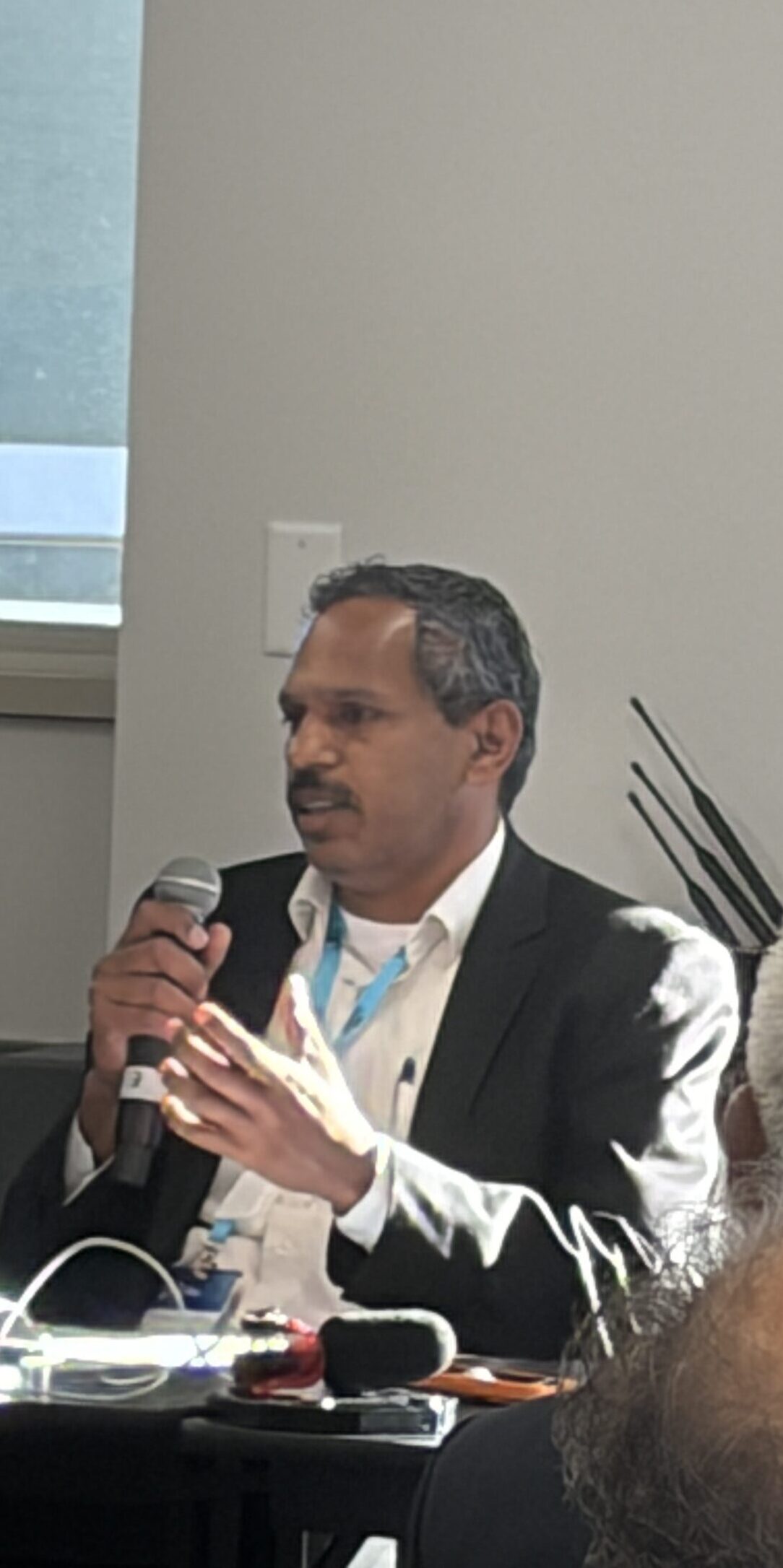
Stereochemistry is a topic that’s rapidly gaining momentum within the industry. To bring clarity to this topic, we hosted a panel discussion where leaders from Arrowhead Pharmaceuticals, Corsera Health and Wave Life Sciences explored how stereochemical control is shaping development strategy, manufacturing approaches and therapeutic performance.
The panel concluded that despite current costs and technological hurdles, the RNA manufacturing industry will inevitably shift toward stereopure production to ensure batch-to-batch consistency and meet evolving regulatory expectations. The panelists agreed that the ability to manufacture well-defined therapeutics is essential for safely and reproducibly scaling these medications for high-prevalence indications.
🎧 Listen to the full discussion
Scalable, Superior Ligation through Engineered Ligases
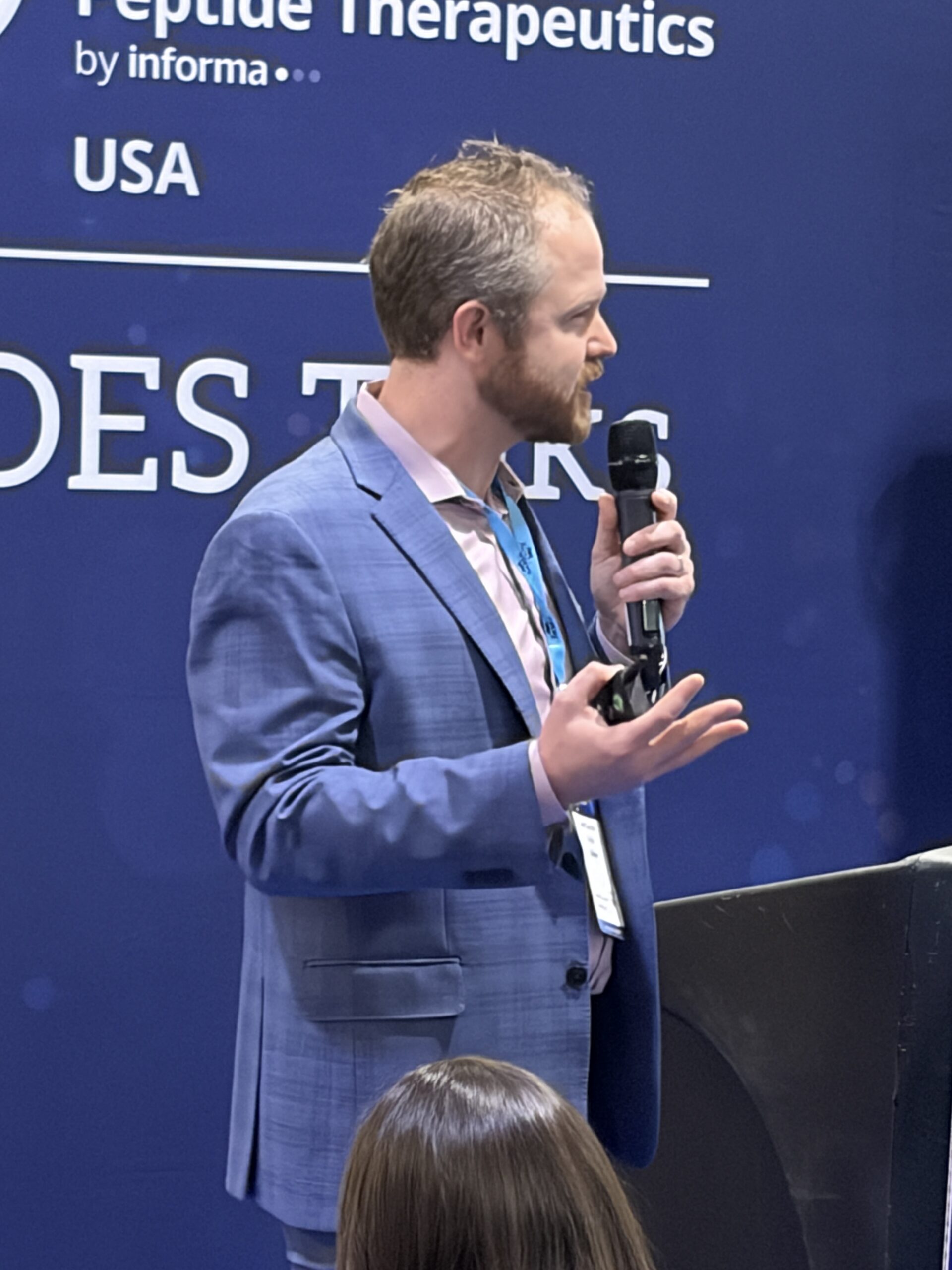
In the Exhibit Hall, Derek Gauntlett, VP of Development, delivered a TIDES Talk focused on ligation-based RNA manufacturing.
RNAi developers are increasingly evaluating ligation as a scalable alternative to traditional solid-phase oligonucleotide synthesis (SPOS). This approach enables the assembly of longer RNA constructs from shorter fragments, offering greater flexibility in design and manufacturing.
But not all ligases perform equally—the ligase you use matters.
In this session, Derek highlighted the importance of ligase selection, presenting data demonstrating enhanced ligation performance using engineered enzymes developed through machine learning–guided design and process optimization. This approach supports improved performance across key manufacturing operations, including:
- Improved manufacturability with established enzyme CQA
- Higher yield of siRNA API
- Simplified unit operation for scaling
Together, these capabilities point to a more scalable, manufacturing-ready approach to RNA assembly.
Redefining Sustainability as a Driver of Scale
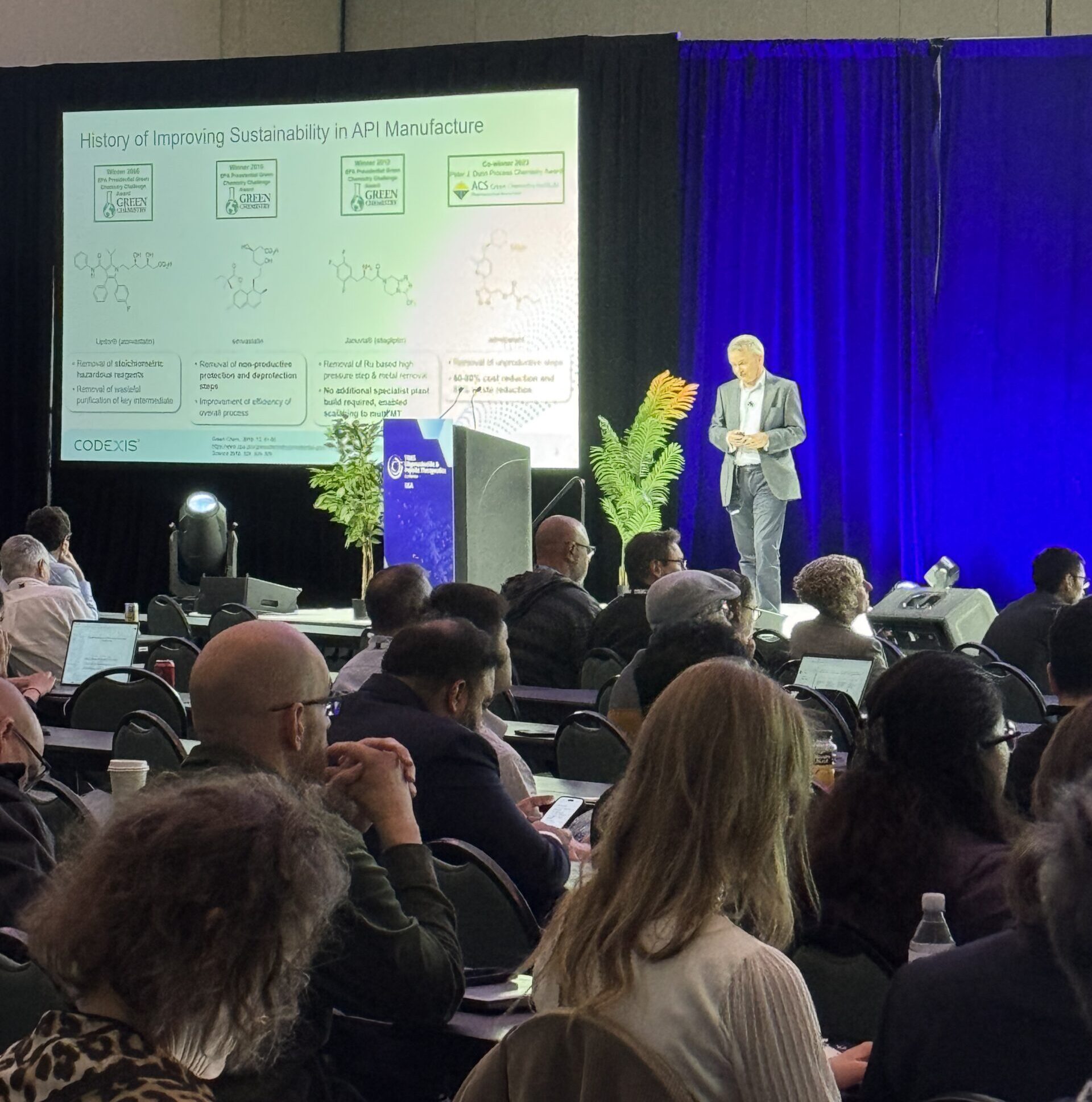
David Entwistle, Ph.D., Senior Director, Technical Client Services, presented a broader view of how scalability and sustainability are becoming increasingly interconnected in oligonucleotide manufacturing.
As production volumes increase, traditional methods, particularly those reliant on organic solvents and reactive chemistries, face growing operational and environmental constraints. In this session, David outlined how biocatalytic approaches compare to SPOS approaches.
Through Codexis’ ECO Synthesis platform, RNA is produced under fully aqueous conditions, eliminating the need for highly reactive reagents and significantly reducing acetonitrile consumption. This reduces environmental impact while also simplifying operations and enabling more scalable, efficient manufacturing. The data presented showed over a 50% reduction in global warming potential compared with conventional methods, including a ~2.7-fold lower impact based on input materials, driven by reduced organic solvent use and aqueous processing.
Enabling Next Generation RNA Therapeutics
The transition of RNA therapeutics into larger indications is reshaping the therapeutic landscape. Meeting this moment demands new approaches that align process design with the realities of scale.
At TIDES USA 2026, Codexis contributed to that shift by presenting technologies that give developers and manufacturing partners greater control over their processes and a clearer path to scalable RNA production.
Date Published:
11 June 2026
Discover the Expertise Powering Possibility
Speak to our experts to learn how our platforms deliver smarter science, faster timelines, and greater confidence. Let’s talk.

Related Content

23 September 2026
4 mins read time
Stereochemistry in RNA Manufacturing: Signal or Noise?

30 July 2026
5 mins read time
Redefining Control in RNAi Manufacturing: How ECO Synthesis Enables True In-Process Analytics

9 July 2026
4 mins read time
Rewriting the Route: Engineering a High-Performance Biocatalytic Cascade
Want to see more blogs?





We're Paving Your Path to the Future
You own the product and we own the path. Together, we’ll take it to market clearly, cleanly and without surprises.