Home / Transformational Technologies / ECO Synthesis Manufacturing Platform / Advancing siRNA Manufacturing By Controlling Phosphorothiate Stereochemistry
Advancing siRNA Manufacturing Through Stereochemical Control by StereoSelect

StereoSelect: Precision Control for Next-Generation RNA Therapeutics
Phosphorothioate (PS) stereochemistry is becoming a critical driver in siRNA manufacturing, affecting therapeutic potency, process complexity, and product quality.
StereoSelectSM is a customizable capability of the ECO Synthesis® Manufacturing Platform that enables controlled PS stereochemistry in siRNA molecules, helping developers improve:
- Biological efficacy
- Product consistency
- Manufacturing efficiency
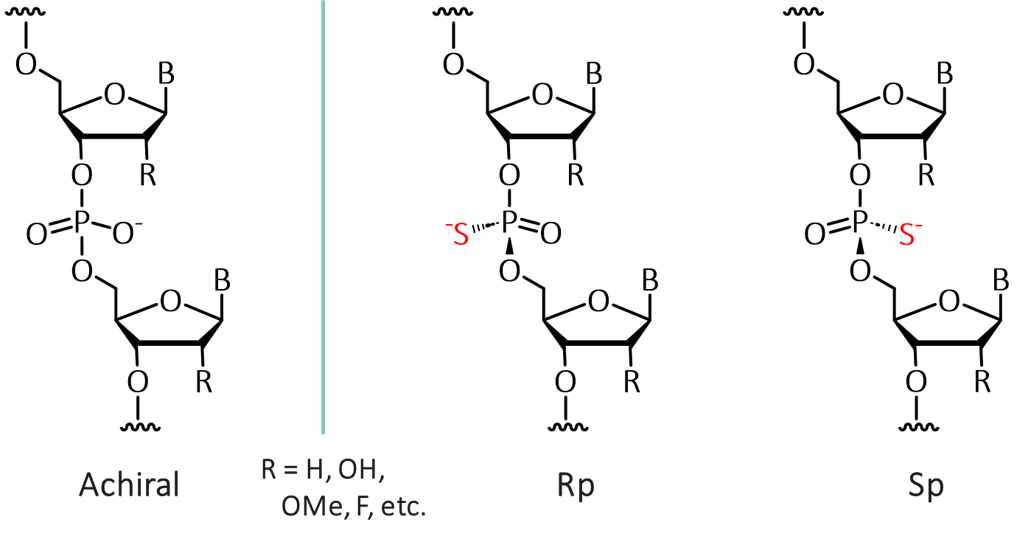
Why Stereochemical Control Matters in siRNA Design
PS linkages, widely used in siRNA therapeutics, introduce chiral centers in the phosphate backbone. Each linkage can exist in two configurations (Rp and Sp), resulting in exponential structural complexity (2ⁿ).
For example, a typical siRNA duplex has 6: PS linkages → 64 oligonucleotide duplexes with unique PS stereochemistry
In a traditional chemical synthesis process with limited stereo-control, this creates stereoisomeric mixtures of therapeutic oligonucleotides, obscuring the biological efficacy of individual sequences.
Impact of limited control over PS stereochemistry
- Reduced sequence to function correlation
- Variability in potency and gene knockdown efficiency
- Compromised stability and metabolic half-life optimization
- Elevated uncertainty in toxicity profiles
- Poor batch-to-batch reproducibility
Precise control over PS stereochemistry enables:
- Clearer insight into sequence–function relationships
- Potential for lower dosing through improved delivery efficiency
- Production of 1 stereo-defined oligo product instead of 64 stereo-isomers, simplifying manufacturing and purification
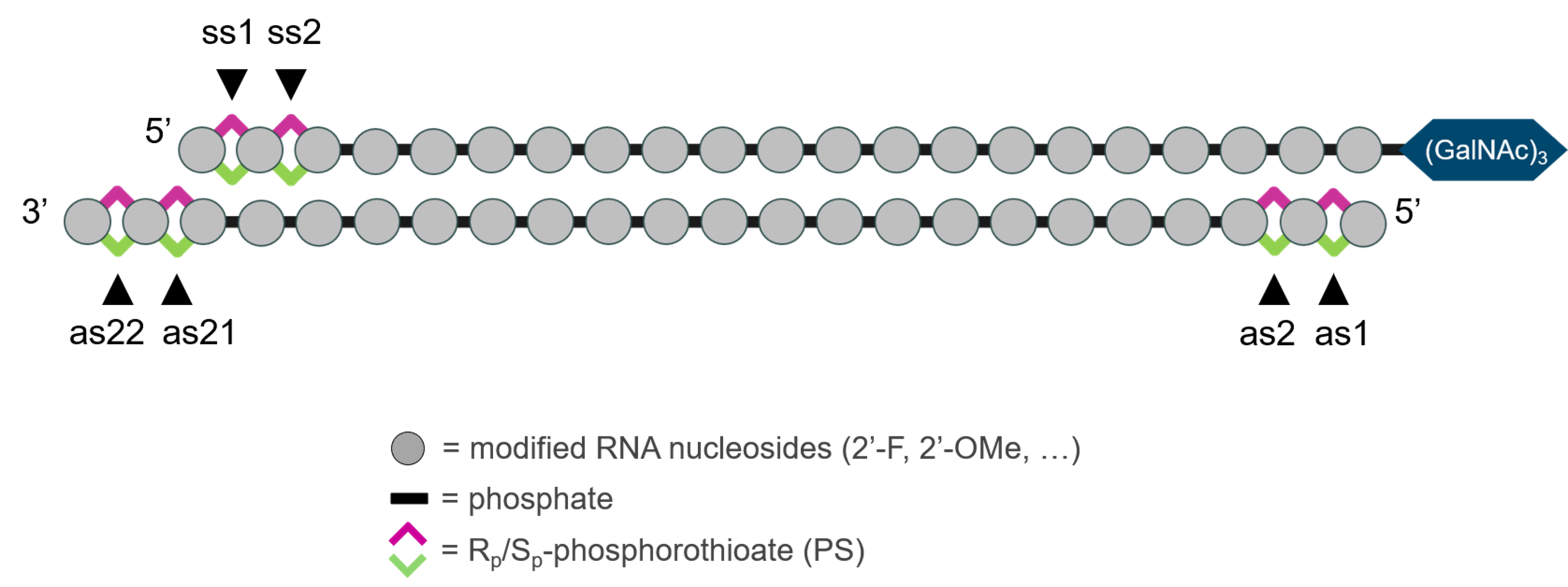
Limitations of Chemical Synthesis
Traditional solid-phase oligonucleotide synthesis (SPOS) offers limited control over PS stereochemistry. Although process conditions and downstream purification can modulate the relative distribution of stereoisomers, the method inherently generates a mixture of Rp/Sp isomers at every PS linkage.
Key challenges with SPOS:
- Limited stereo-control at each PS linkage
- Increasing process and product with each additional PS linkage
Downstream impact:
- Difficult purification and analytical characterization
- Increased CMC and regulatory complexity
- Higher cost and reduced yield
- Lack of alignment between stereochemistry and therapeutic performance
For therapeutic oligonucleotides containing PS linkages, these challenges rapidly scale:
- Resolution of individual stereoisomers at scale is neither technically nor economically feasible
- Meeting regulatory requirements is complicated by batch-to-batch variability in stereoisomeric composition
- Purification by fractionated chromatography is time and resource-intensive
Enzymatic Synthesis Enables Control of PS Stereochemistry
The ECO Synthesis (enzyme-catalyzed oligonucleotide) Manufacturing Platform enables precise control of PS stereochemistry during RNA synthesis by leveraging enzyme selectivity.
This approach allows:
- User-defined stereochemistry at each PS linkage
- Single product dramatically reduces downstream challenges and simplifies analytical characterization
- Improved process scalability, robustness and reproducibility
- Eliminates regulatory challenges due to batch-to-batch variations
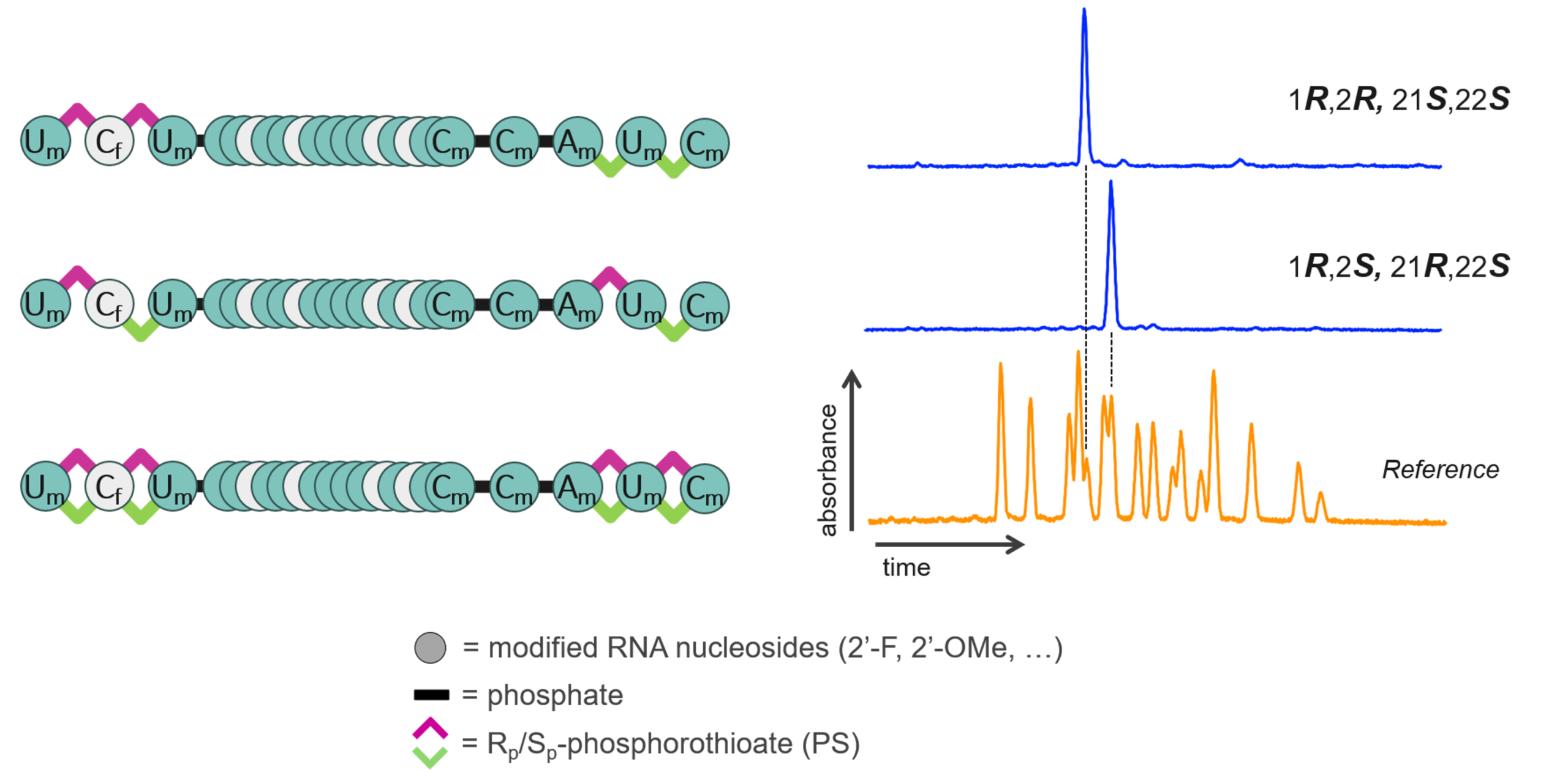
Key Capabilities of StereoSelect

User-defined Stereochemical Outcomes
Engineered polymerases enable formation of PS linkage with strict control over stereochemistry at any position in the oligonucleotide sequence.
Sequence-Specific Chiral Control
Enzymatic synthesis enables precise stereochemical patterns (e.g., RpRp, RpSp, etc) across the oligonucleotide sequence.
- Supports programmable PS stereochemistry
- Enables targeted optimization of siRNA performance
Simplified Analytical Characterization
Reducing stereochemical heterogeneity leads to:
- Improved analytical resolution
- More defined duplex profiles
- Streamlined release and QC testing
StereoSelect Technical Content
Controlling Phosphorothioate Stereochemistry: Challenges and Innovations in Oligonucleotide Manufacturing
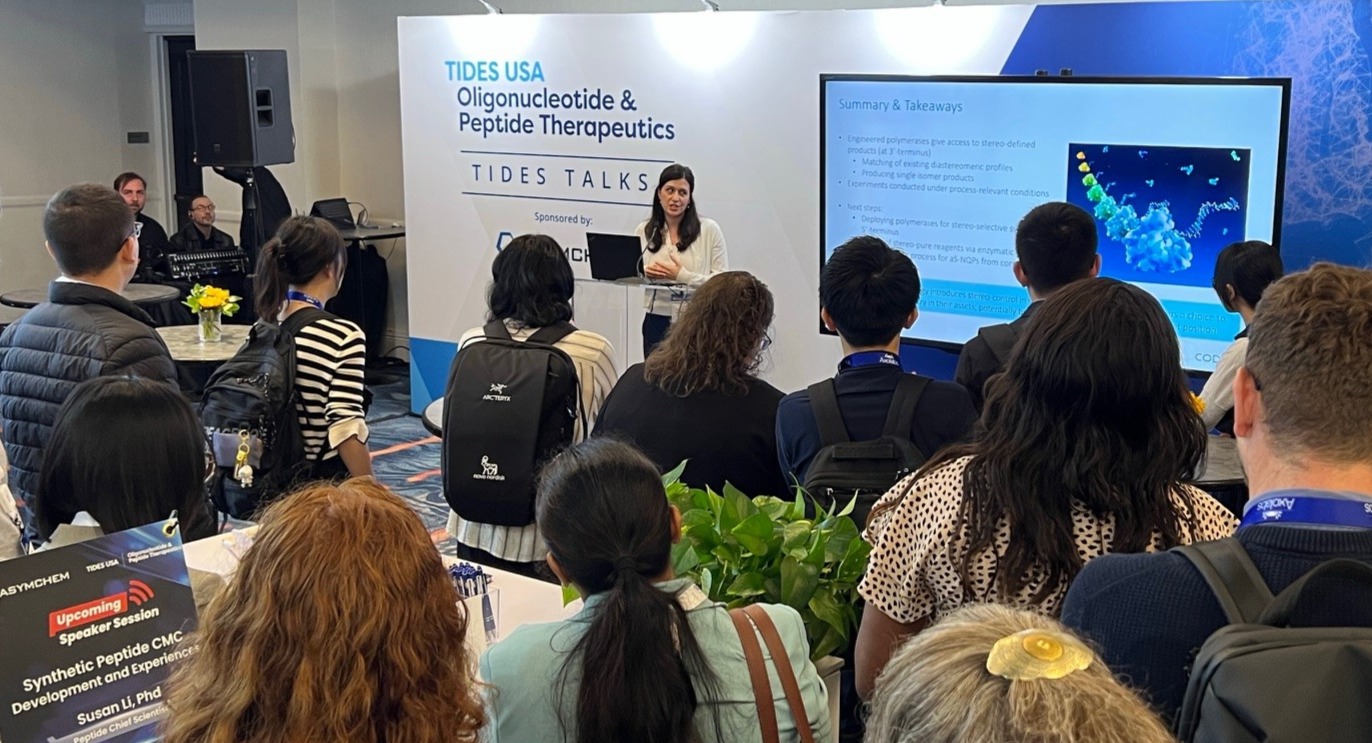
Comparative Analysis of Diastereomeric Distribution in siRNA Synthesis: SPOS vs Enzymatic Synthesis
Industry Perspective: Stereochemistry as a Future Standard
Emerging industry consensus highlights stereochemical control as a growing priority in RNA therapeutics development.
We recently hosted a panel discussion with CMC and medicinal chemistry leaders from Corsera Health, Arrowhead Pharmaceuticals, and Wave Life Sciences. Below are key insights from the panel (CMC and medicinal chemistry leaders):
- Stereochemical control impacts potency and dosing efficiency
- Increasing relevance for regulatory expectations
- Manufacturing of therapeutic oligonucleotides likely to evolute toward assets with StereoSelect PS stereochemistry
The emerging consensus is clear: while stereopure approaches may not be an immediate requirement, they are likely to become inevitable over the long term.

Talk to an Expert
Learn how stereochemical control in siRNA manufacturing can improve your therapeutic program.